
Protect Research Budgets
University of California faculty need a stable cost environment to perform research. Unexpected increases in the costs of labor, benefits, facilities, and services and sudden adjustments to indirect cost reimbursements create strains on research budgets.
Recent landmark collective bargaining agreements rightfully adjusted compensation for Graduate Student Researchers (GSRs) and Academic Postdoctoral Scholars. But the University placed the entire burden of these increases on faculty grants. Essentially, the University bargained cost increases with faculty research budgets. However, increased labor costs are hardly the only example of university administrations shifting costs onto faculty research budgets. In 2019-2020, UCPath implemented a Composite Benefit Rate Model which increased employee benefit costs.
As one of the few non-unionized groups at UC, faculty have less control over our working conditions, making it possible for administrators to treat faculty grants as a flexible pool of money to solve other budgetary problems.
POSTDOC MINIMUM SALARY SCALE INCREASES
20-23%
GSR WAG INCREASES
20-80%
CENTRAL FUNDS PROVIDED
None
Our Demand: Commit centralized funds to protect faculty grants from unpredicted increases in wages, benefits, and other UCOP-controlled costs. Adopt the Rutgers faculty union contract standard in which the central administration covers the difference between budgeted expenses and unexpected increases.
The Problem: In recent years, the cost of research on UC faculty grants has risen at an unsustainable rate.
These increases do not stem from expanded research footprints, but rather from UCOP actions which shift costs onto faculty grants:
Labor Costs
In 2022, UCOP negotiated significant wage increases for GSR and postdoctoral researchers, without providing any funds from central budgets. Minimum salary scales for postdocs surged by 20% to 23% and GSRs received 20% to 80% wage increases. While the Faculty Association supports a living wage for all university employees, we reject the idea of UCOP bargaining with faculty grant money.
The Composite Benefit Rate (CBR) Model
In 2019-2020, UCPath transitioned campuses to a flat-rate benefit model, which tended to increase the charges on faculty research funds. While the effects varied, they were significant enough that the Academic Council Chair alerted the UC President Napolitano to the extraordinary burden on faculty grants.
Indirect Costs
Changes in the way UCOP or campus administrations re-distribute Indirect Costs (Facilities & Administration) have likewise caused unexpected changes in faculty resources.
When forced to absorb an unpredicted cost increase, faculty PIs are left with no choice but to downscale the scope of their projects. This financial strain results in reduced hiring of graduate researchers and permanent technical staff, as well as reduced research output.
UC faculty members generate billions of dollars in extramural funding annually, driving innovation and securing the University of California’s global prestige.
We call upon UCOP to protect its research enterprise, stabilize its laboratories, and enact a centralized funding mechanism modeled after a successful peer institution.
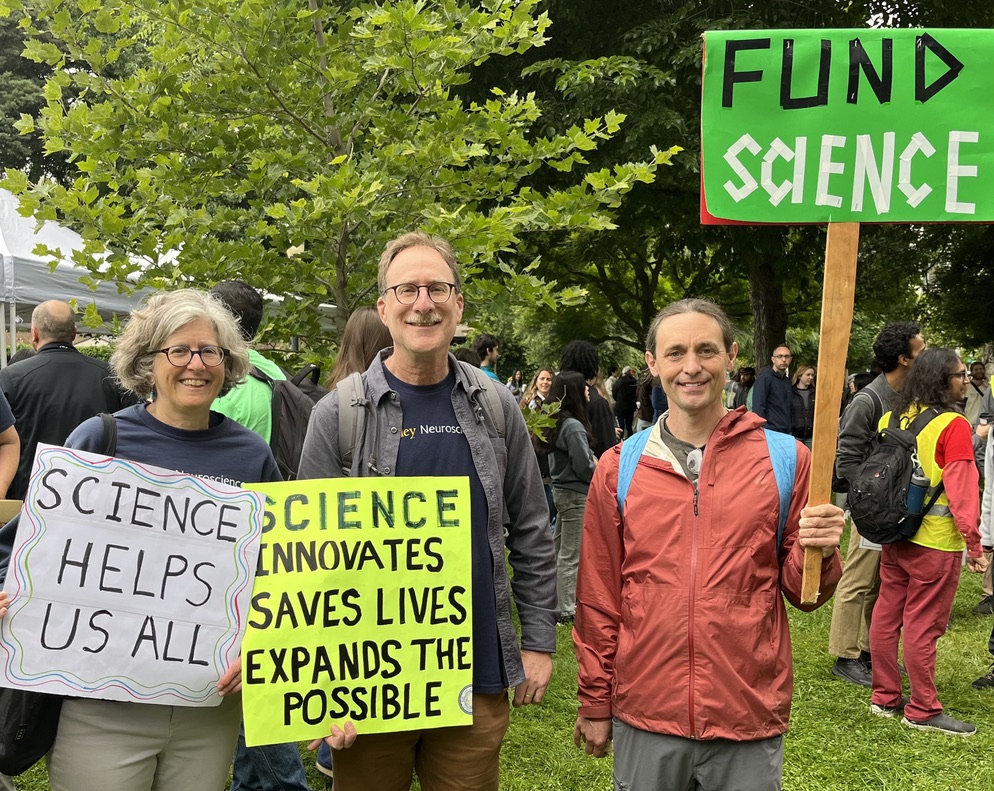
Protecting the academic enterprise is not unprecedented at UC: when the Composite Benefit Model was implemented, UCOP provided some funds to cover fringe benefit costs, though not enough to cover health insurance or increased retirement contributions.
Our Proposal: Adopt the Rutgers central stabilization model at UC.
There is a model for centralized funding of unpredicted cost increases. The Rutgers University AAUP-AFT Union Contract requires the central university administration to absorb the financial costs on research funds beyond those predicted by the grants’ original budget.1
“The University shall fund contractual salary increases for unit members [graduate employees] on grants with budgets approved by funding agencies that are not already accounted for in existing grant funds or unit/department budgets, including start-up funds. This will be accomplished by awarding compensatory funds to cover the difference between budgeted salary increases and negotiated salary increases, if the total amount of the awarded grant funding is not increased by the grantor to cover the negotiated salary raises for the duration of the grant or start-up funds. If unit/ department budgets do not have sufficient funds to pay the negotiated increases, the University shall fund those increases.” — Rutgers Contract, 25
This is an excellent starting point for cost stability — not just for wages, but for all exceptional increases controlled by UCOP or the campus administration that affect research costs. We urge UCOP to negotiate with faculty over this concern.
A binding contract
Central funds should cover UCOP-driven cost increases on faculty grants.
A seat at the table
An elected, representative faculty committee to negotiate with UCOP.
Real accountability
Faculty take part in
implementation and subsequent
oversight.
This is what organizing can win.
–REINVEST IN THE MISSION: SIGN THE PETITION–
Sources & Notes
- Rutgers AAUP-AFT, Article 8.A – Salary Provisions, Faculty Compensation Program (Hereinafter “FCP”) and Health Insurance Benefits. Full-Time Faculty and Graduate Workers Contract, 2022–2026, https://rutgersaaup.org/full-time-faculty-and-graduate-workers-contract/